
Commuting and Getting Around Layton, UT in 2026
Layton sits right in the middle of the Davis County corridor, roughly 25 miles north of Salt Lake City and 15 miles south of Ogden. Buyers looking at homes here often ask the best real estate agent in Layton, UT about the daily drive, especially since the local median sale price hovers around $500,000. For that price point, you get quick access to Interstate 15 and a major commuter rail station.
The local transportation network relies on a mix of major highways and the Utah Transit Authority system. Whether you work at Hill Air Force Base next door or commute down to the Salt Lake Valley, knowing the local routes helps you choose the right neighborhood.
Public Transit Services in Davis County
The Utah Transit Authority (UTA) operates a network of buses and commuter trains that serve Layton and the surrounding Davis County area. The main hub is the Layton station, located right off Main Street. This station connects the local bus routes with the FrontRunner, an 88-mile commuter rail line running from Ogden down to Provo.
Local bus routes spider out from the station to cover residential neighborhoods and major commercial centers. These buses provide a practical alternative for residents who prefer not to drive, linking subdivisions directly to the rail hub. Many commuters park at the station's surface lot, ride the train to work, and use the buses for local errands.
Fares vary depending on the service, but standard bus rides and train tickets keep daily commuting costs predictable. Using the UTA system helps bypass highway congestion, especially during the morning and evening rush hours.
FrontRunner Travel Times to Salt Lake City and Ogden
Riding the FrontRunner simplifies the trip to major employment centers north and south of town. The trains run on a fixed schedule, making it easy to plan your departure and arrival times.
-
Salt Lake City: The train ride from Layton to Salt Lake City Central Station takes about 30 minutes. From there, riders can transfer to the TRAX light rail system to reach the University of Utah or the downtown business district.
-
Ogden: Heading north, the trip to Ogden takes approximately 11 to 15 minutes.
-
Clearfield: The adjacent station in Clearfield, UT is a short five-minute ride away, providing quick access to neighboring industrial parks.
Driving Routes and Highway Access
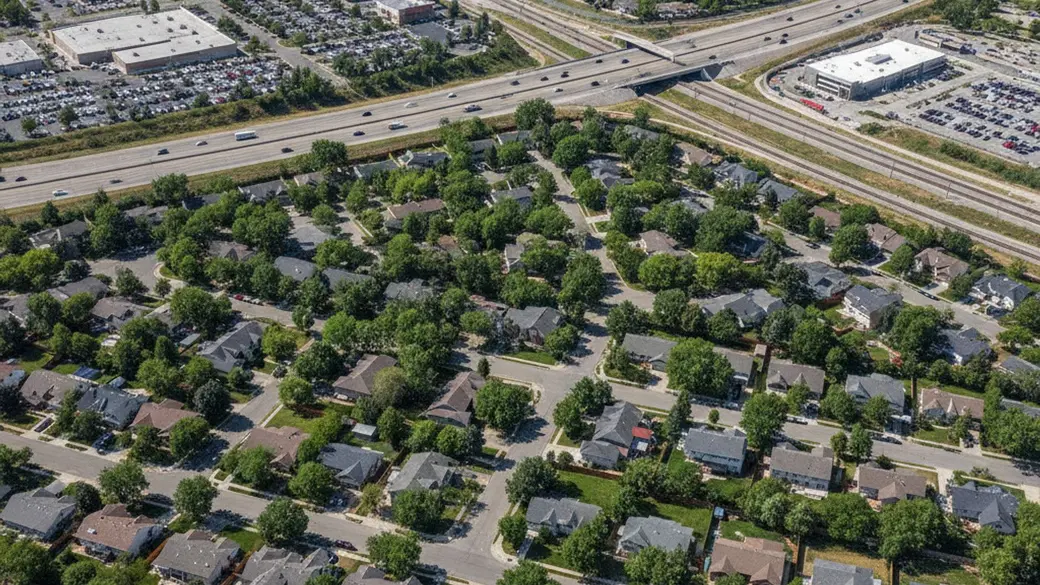
Interstate 15 runs directly through the center of Layton, serving as the primary north-south artery for drivers. The highway includes high-occupancy vehicle (HOV) express lanes through Davis County, which speed up the trip for carpoolers and pass-holders. The recent Layton Parkway interchange helps distribute local traffic and reduces bottlenecks at the older on-ramps.
On the eastern side of the city, US Route 89 provides a secondary north-south option. This highway traces the base of the Wasatch Mountains and offers a steady route toward Ogden or south toward Salt Lake City. Drivers often use US-89 when I-15 backs up due to accidents or heavy volume.
For trips out of state or flights, residents connect from I-15 to Interstate 80 in Utah to reach the Salt Lake City International Airport. Without traffic, the drive from central Layton to the airport terminals takes roughly 30 minutes.
Commuting to Hill Air Force Base and Employment Centers
Hill Air Force Base sits immediately north of the city limits, making Layton a popular home base for military personnel and civilian contractors. Most drivers use Hill Field Road or the local I-15 exits to reach the base gates. Morning traffic toward the base peaks between 6:30 AM and 8:00 AM, while the afternoon outflow starts around 3:30 PM.
Beyond the base, Layton features several business parks and logistics facilities located near the Union Pacific Railroad lines. Commuting to these industrial corridors generally involves short drives on surface streets like Antelope Drive or Main Street.
Walkability and Local Bike Trails
The Denver and Rio Grande Western Rail Trail stretches 23.5 miles through Davis County and cuts directly through Layton. This paved pathway gives cyclists and pedestrians a dedicated, motor-free route connecting multiple towns. It serves as the backbone of the city's non-motorized transportation network.
Walkability within Layton depends entirely on the neighborhood. Subdivisions built in the last two decades typically feature complete sidewalk networks, while some older, semi-rural pockets lack paved pedestrian paths. Major thoroughfares include dedicated bike lanes, but the volume of fast-moving vehicles means many casual cyclists prefer the rail trail.
The city continues to expand its cycling infrastructure to link residential areas with commercial zones. These improvements make it easier to handle short trips on a bike rather than starting the car.
Reaching Retail, Parks, and Healthcare
Local amenities are clustered along the main highway corridors, making them easy to reach by car or bus. The Layton Hills Mall sits just west of I-15 and is serviced directly by UTA Bus Route 640. This route also connects riders to retail centers in the Ogden area.
Healthcare facilities, including Holy Cross Hospital - Davis, are located near major intersections with ample surface parking. For outdoor recreation, city parks are distributed throughout the residential zones, with many sitting less than a mile from the nearest bus stop or the rail trail.
Rideshare Availability and Transit Apps
An Uber or Lyft ride from Layton to the Salt Lake City International Airport typically takes 30 to 40 minutes, depending on the time of day. Both rideshare platforms maintain a steady presence in Davis County, providing an alternative for early morning flights or late-night returns.
Local taxi companies also operate in the area, though app-based rideshare services dominate the short-distance market. Fares fluctuate based on demand, with prices spiking during the morning commute and evening rush hours.
Daily commuters should download the Transit app, which the UTA endorses for real-time tracking. The app provides live updates on bus locations, FrontRunner departure times, and service delays, helping riders adjust their schedules on the fly.
Frequently Asked Questions
What are the public transportation options in Layton, Utah?
Layton is served by the Utah Transit Authority (UTA), which operates local bus routes and the FrontRunner commuter rail. The central transit hub is the Layton station, where riders can transfer between buses and the train. These services connect the city to Ogden, Salt Lake City, and surrounding Davis County towns.
How long is the train commute from Layton to Salt Lake City?
Riding the FrontRunner from the Layton station to Salt Lake City Central Station takes approximately 30 minutes. The trains run on a predictable schedule, allowing commuters to bypass highway traffic entirely.
Can I get around Layton without a car?
Living without a car is possible if you choose a home near the Layton FrontRunner station or a major bus line. However, the city is geographically spread out, and most residents rely on a personal vehicle for grocery runs and general errands.
What is the best driving route to commute from Layton to Hill Air Force Base?
Most drivers use Hill Field Road or take Interstate 15 north to the base exits. The drive is short, but traffic backs up near the gates during the morning influx between 6:30 AM and 8:00 AM.
How much does it cost to use the UTA FrontRunner and local buses in Layton?
A standard one-way bus fare is $2.50, while FrontRunner tickets start at $2.50 plus a small distance fee for each additional stop. Regular riders should purchase a monthly pass to reduce their overall commuting expenses.
Where are the worst traffic bottlenecks in Layton, UT during rush hour?
Congestion typically peaks at the Interstate 15 interchanges, particularly around Antelope Drive and Hill Field Road. US Route 89 also slows down during the evening commute as northbound drivers return from Salt Lake City.
Categories
Recent Posts