Mortgage Rates in Layton, UT: Payments, Loan Limits and Where You Can Negotiate
Borrowing costs shape what you can buy, but local housing inventory dictates how much room you have to lower those costs. In Layton, UT, the factor buyers control is the seller, not the rate.
Key Takeaway
No article can give you a fixed Layton mortgage rate. Get same-day Loan Estimates from at least three lenders and compare them. Single-family homes are where you can negotiate: falling values make asking the seller to fund a rate buydown realistic. Townhouses cost less but leave less room to negotiate.
Who This Guide Is For
You are planning to finance a home in Layton and want to know what a rate does to your monthly payment, which loan and lender to choose, and where you can bring the cost down.
Mortgage Rates in Layton: Where You Can Negotiate
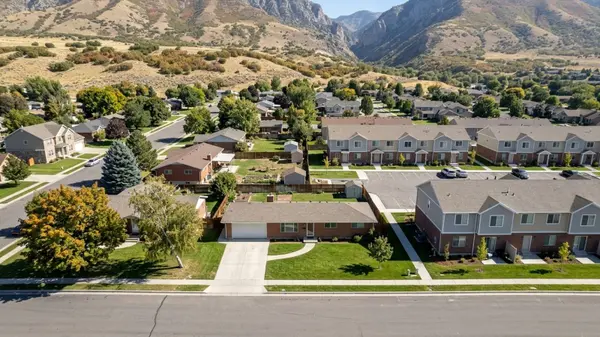
Lenders set rates on national markets, but the price and seller concessions are local. In Layton, those split by property type. Single-family values fell 5.3% over the past year, while townhouses rose 3.3%.
Single-Family Homes
The typical Layton house closes at 98.7% of list, about 1.3% under its asking price. That is roughly $7,000 on a median-priced single-family home of $534,787. You can ask for that gap as a credit toward discount points rather than a straight price cut. Fannie Mae limits seller contributions, so ask your lender about the cap for your loan type and down payment.
Nearly 18% of single-family homes sold above list. The buydown request works on listings that have sat a few weeks, not on the freshest ones.
Townhouses
Townhouses have the lowest median price of any Layton segment, roughly $111,000 below single-family homes. A smaller loan means every rate point costs fewer dollars. They sit on the market almost two weeks longer than houses, yet they close at 99.6% of list. These sellers hold their price even after a median 55 days on market, which leaves far less room to negotiate your rate down.
What you give up is borrowing power: monthly HOA dues count toward your debt-to-income ratio and shrink the loan a lender will approve.
Where to Get a Mortgage Rate Today
Your rate moves daily with bond markets. It also depends on your credit, down payment, loan type, points and lock length. The real number comes from a same-day Loan Estimate, the standardized three-page form lenders must issue within three business days of receiving your application.
Multiple mortgage credit checks within a short window count as one inquiry for scoring purposes, so shopping around won't damage your credit profile.
What a Rate Change Does to Your Payment
Payment on a Median-Priced Layton Home
Assume you put 10% down on the all-homes median price of $506,759. That leaves a loan of about $456,083.
Illustrative rates, not today's rate: at 6%, principal and interest run about $2,734 a month, and at 7% they run about $3,034. That roughly $300 monthly difference means one percentage point of rate is worth roughly $50,000 of borrowing power on a typical Layton home.
These figures cover principal and interest only. Your real payment adds your property tax bill, homeowners insurance and possibly mortgage insurance, all shown on your Loan Estimate.
Price Cut or Seller-Paid Rate Buydown
A seller credit can pay for permanent discount points or a temporary buydown. A permanent buydown lowers every payment for the life of the loan. An equal price cut barely moves the monthly figure, though it does lower the total loan amount and the property tax base.
A temporary buydown only lowers the payment for the first year or two. Permanent points only pay off if you keep the loan past the break-even point, so refinancing or selling early can waste the credit.
Ask your lender to price the same offer three ways: a price cut, permanent discount points and a temporary buydown.
Loan Types That Change Your Rate
Loan structure changes the interest you pay, whether your target price is near the Davis County conforming limit or you qualify for government-backed financing.
30-Year vs 15-Year Fixed
A 15-year loan usually carries a lower rate and far less total interest. However, its much higher monthly payment raises your debt-to-income ratio, which can shrink the price range a lender will approve.
Adjustable-Rate Mortgages
An adjustable-rate mortgage gives a lower starting rate for a fixed period. After that, it adjusts based on an index plus a margin, within set caps. If you plan to move or refinance within a few years, get an ARM quote alongside a 30-year fixed.
Ask for the index, margin, caps and worst-case payment in writing. If rates are higher when the fixed period ends and you can't refinance or sell, your payment rises up to the cap.
FHA, VA and USDA Loans
Government-backed loans can carry competitive rates with low or no down payment requirements. FHA loans have a specific limit for Davis County. VA loans require military eligibility and carry a one-time funding fee, though veterans receiving VA compensation for a service-connected disability and active-duty Purple Heart recipients are exempt. USDA eligibility depends on the specific address, so check your target home on the USDA eligibility site. Utah first-time buyer loans and grants can stack with these loans to help with the down payment.
Mortgage insurance or funding fees can offset a lower rate, so compare the total monthly cost on each Loan Estimate.
How to Get a Better Mortgage Rate
You can't control the bond market, but you can control your application.
Raise Your Credit Score Before You Apply
Pricing tiers mean a higher score usually earns a lower rate or fewer points. Pay down revolving balances, avoid new credit and dispute errors well before you apply.
Score changes can take a billing cycle or more to show up. Last-minute fixes rarely help a contract that's already in motion.
Choose Your Down Payment Size
A bigger down payment lowers the loan-to-value ratio. That can improve pricing and remove or reduce mortgage insurance. Homebuyer assistance programs can help fund the down payment if you are short.
Draining your savings for a larger down payment leaves less cash for closing costs and reserves. Some loans require you to show cash reserves to qualify.
Compare at Least Three Lenders on the Same Day
Request Loan Estimates from at least three lenders on the same day, with the same loan amount, term and lock period. Compare page two for origination charges and points, and look at the APR rather than only the rate.
One lender quoting with points and another without will make the first look cheaper than it is.
Lock Your Rate
A lock holds a quoted rate until closing, as long as you close within the lock period and your application doesn't change. Time it to your contract and closing date. Before you commit, ask about lock length, extension fees and float-down options. Longer locks can cost more, and if closing slips past the lock, you may pay to extend or take the current rate.
How to Choose a Mortgage Lender in Layton
Banks, credit unions, mortgage brokers and direct lenders all operate differently when setting or shopping your rate. A local loan officer adds value on a Layton contract through appraisal familiarity and fast pre-approval updates when you write offers.
Ask potential lenders about their timeline to close, their lock policy, who services the loan and how seller credits are applied. Look up the loan officer's license on NMLS Consumer Access to verify their credentials. Doug Cary can introduce lenders he has closed with to help you start your search.
What Mortgage Rates Mean If You Are Selling in Layton
Rate-sensitive buyers shop by monthly payment, and with values down and supply sitting at 3.3 months, sellers compete for those buyers.
A credit toward a buyer's rate buydown can move a listing faster than a price cut of the same size because it lowers the buyer's payment more directly. Doug Cary can review whether a concession or a price adjustment fits your specific listing.
At a Glance
- Median sale price, all homes: $506,759, down 7% year over year (208 sales, 90 days ending 2026-09-30)
- Median sale price, single-family: $534,787, down 5.3% year over year (170 sales, 90 days ending 2026-09-30)
- Median sale price, townhouses: $423,442, up 3.3% year over year (37 sales, 90 days ending 2026-09-30)
- Median days on market: 43 all homes, 42 single-family, 55 townhouses (90 days ending 2026-09-30)
- Sale-to-list price: 98.8% all homes, 98.7% single-family, 99.6% townhouses (90 days ending 2026-09-30)
- Share sold above list: 17.1% all homes, 18% single-family, 13.8% townhouses (90 days ending 2026-09-30)
- Months of supply: 3.3 all homes, 3.2 single-family, 3.3 townhouses (90 days ending 2026-09-30)
- Active inventory: 225 all homes, 178 single-family, 39 townhouses (90 days ending 2026-09-30)
- Median price per square foot: $221 all homes, $220 single-family, $227 townhouses (90 days ending 2026-09-30)
Layton Mortgage Rate FAQs
What Is the Mortgage Rate This Year in Layton, UT?
The Freddie Mac Primary Mortgage Market Survey is the national weekly benchmark. It estimates what a typical consumer might see if they shopped around, using loan application data submitted to Freddie Mac's automated underwriting system with the loan product and borrower profile held constant. Your actual rate is the one on a same-day Loan Estimate.
Do Mortgage Rates in Utah Differ from Other States?
Rates are priced nationally but vary by lender, loan size and borrower profile, and many lenders offer different rates by state. The CFPB's explore interest rates tool shows rates recently offered in your state to borrowers with your credit score, loan type and down payment.
What Is the Jumbo Loan Limit for 2026 in Davis County, Utah?
The FHFA sets a conforming loan limit for Davis County each year, and loans above it are considered jumbo. A typical Layton home falls well under this limit, so jumbo pricing matters mainly at the high end of the market.
What's the Average Mortgage Payment on a $500,000 House in Layton?
Illustrative rate, not today's rate: 20% down on a $500,000 house gives a $400,000 loan. At 6.5% over 30 years, that costs about $2,528 a month in principal and interest, before property tax and homeowners insurance.
Can I Afford a $400K Home in Layton on a $70K Salary?
The CFPB advises a mortgage-specific debt-to-income ratio of 28 to 35 percent; at the low end, a $70,000 salary supports about $1,633 a month for the full payment. Putting 10% down on a median-priced $423,442 townhouse at an illustrative 6% rate costs about $2,285 in principal and interest before taxes, insurance and HOA dues. That likely stretches the budget unless you have a larger down payment, homebuyer assistance or very low other debt.
What Is the 2% Rule for Refinancing?
It's an old rule of thumb: refinance when you can cut your rate by about two points. Lenders now focus on the break-even point instead. Divide your closing costs by your monthly savings to find the months needed to recoup them.
Should I Wait for Mortgage Rates to Drop Before Buying in Layton?
No one can reliably predict rates, so the decision comes down to whether you can afford the payment today and how long you plan to stay. A later refinance depends on having enough equity, good credit and cash for closing costs.
Sources
- Redfin: Data Center
- Freddie Mac: Mortgage Rate Survey Explained
- CFPB: Explore Interest Rates Tool
- CFPB: What is a Loan Estimate?
- CFPB: What's a lock-in or a rate lock?
- CFPB: How should I use lender credits and points?
- Fannie Mae: Interested Party Contributions
- CFPB: Consumer Handbook on Adjustable-Rate Mortgages
- VA.gov: Funding fee who pays, who is exempt
- Fannie Mae: General Requirements for Credit Scores
- CFPB: Your Money, Your Goals Debt to Income Calculator
Categories
Recent Posts